Seven Years Just to Give It a Shot
How prototypes reveal what’s missing

Earlier this week I finally shipped Kompo, a game for learning composition. The idea had been waiting seven years for its moment. That’s a lot of backstory, and I want to share some of it here.
In 2018 and 2019, I taught design. One of the topics was composition. A lot of students came in without any background in art theory. I’d draw evenly spaced squares on the board, and they’d nod like they got it. Then, during the exercises, they’d add little rays to their circles to make them into suns. It was hard to get across that we were still just figuring out where to put the visual weight. Making it pretty would come later.
That’s around when I got the idea for Kompo. I couldn’t code yet, so I put together a prototype in Figma. It was easy to show how everything would look in the mockups. Still, the game logic was something I had to work out in my head. So of course I threw myself into the student dashboard, badges, all that stuff. I never figured out what you’d actually do in the game.
Over the years I got more comfortable with code and gained some experience building working prototypes. I kept thinking about the project, but I still couldn’t bring myself to pick it up. It’s hard to give an idea two weeks when you don’t know if it’s worth it. And to find out, you have to give it two weeks. Catch-22.
Working on Frontier Icons changed that. I’d seen that I could use Codex to build interfaces that actually worked. Now I could try out the idea in a couple of hours. It used to take a couple of weeks. I was out of excuses.
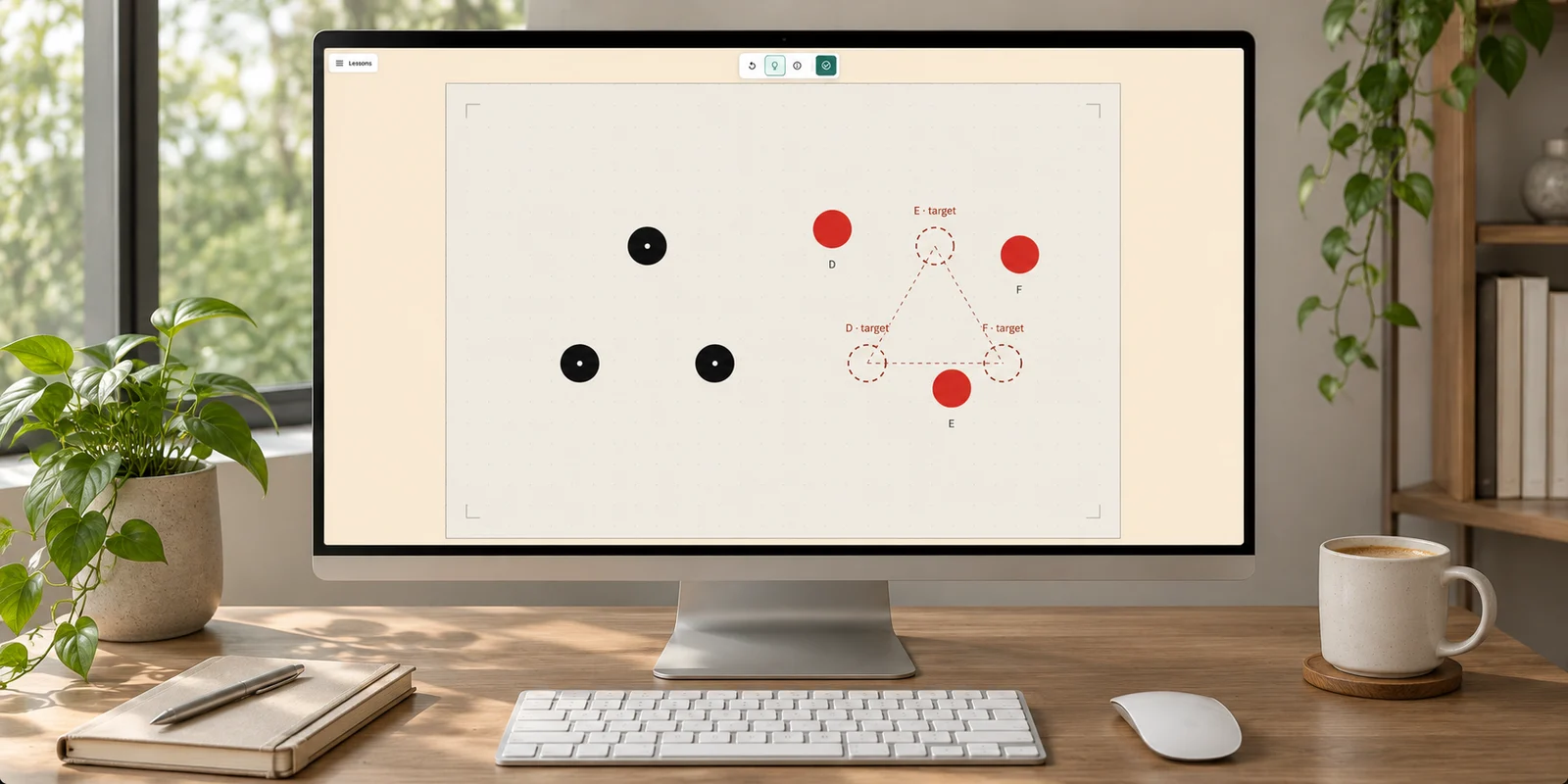
The lessons worked in the first version, and the game could check your answers. Still, playing it was… boring. If I’d had to slog through two weeks of coding to find that out, I’d honestly have spent a month unpacking it in therapy and crying into my pillow. There it was, the idea that had been taking up space in my head for years. And it felt like complete crap.
But I’d only spent an hour or two on it, so I set it aside and came back to play a few more times. I’d finish an exercise and move on to the next one, and I still never got that little “hey, I did it!” feeling. What if it was a feedback problem?
I do a lot of learning on my own, and I know how easy it is to get lost when there’s nobody to help you figure out what matters. And when I think back on my teachers, I often remember the feedback they gave me. One would make me want to give up. Another would make me want to dig deeper. That’s what the game needed. A mentor.
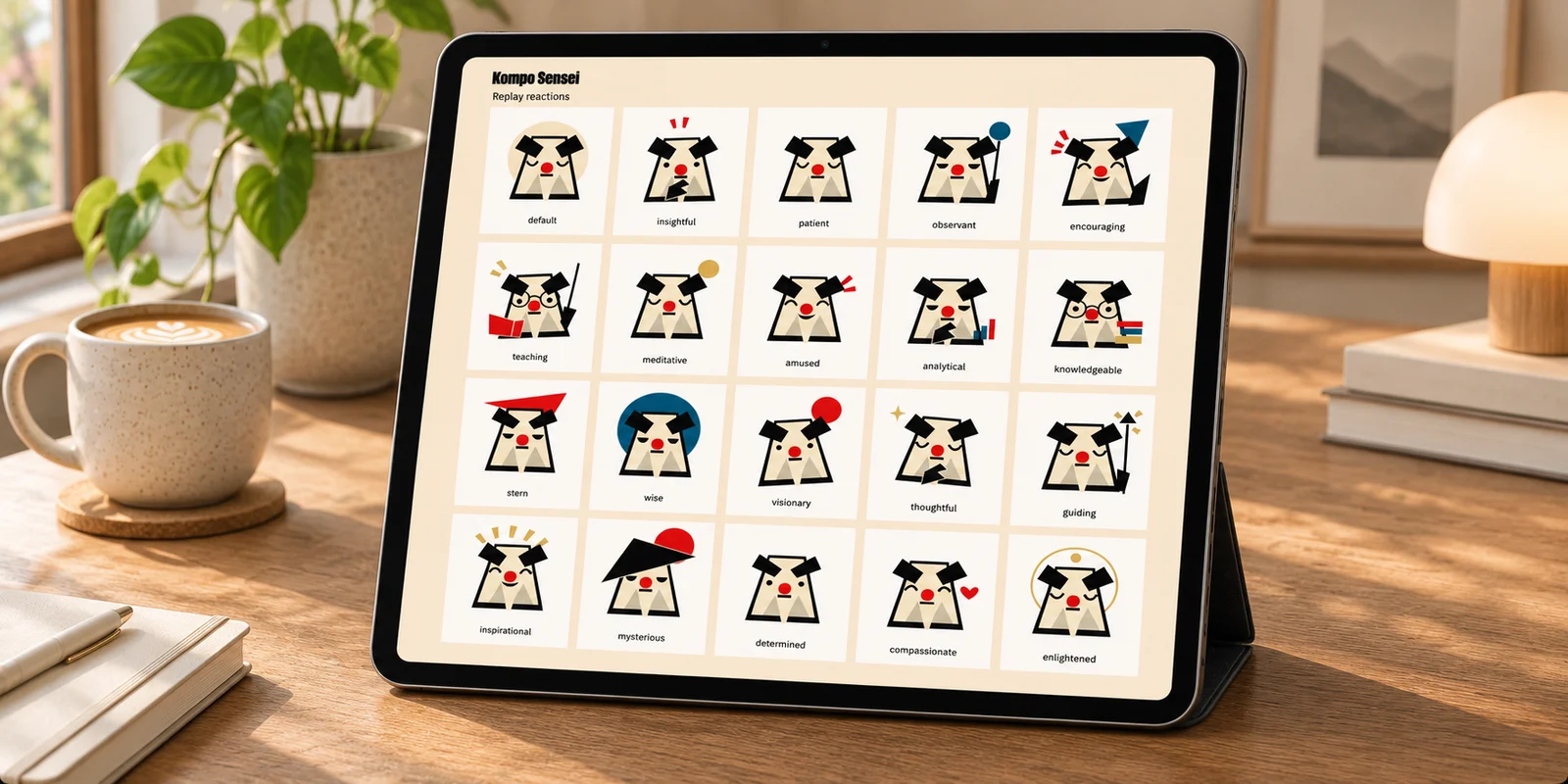
That’s how Sensei came about. I built him out of more or less the same geometric shapes you work with in the game. He follows you through the levels and reacts when you get something wrong or do something well. Pretty simple, and hardly new. But it worked! The next time I tested the levels with Sensei, I caught myself still playing even though I’d checked everything I meant to check. I’d just gotten into it.
I’d been turning the idea over in my head for seven years. It took actually playing it to see what was missing. Before, I had to fill in so many blanks in my head while I was still working in mockups and plans. It ate up my mental RAM before I’d even decided to take on the project.
Now prototyping feels like sketching. Block in the big shapes, refine what matters, erase the extra bits. You can already see whether you’ve got something. Either way, there’s room in your head for the next idea. When trying something costs so little, even a clumsy idea gets a shot.