Why pointless activities matter
Activities—whether work, hobbies, or socializing—consume energy. Yet people often claim that certain activities restore it. If so, can recharging activities balance draining ones?
Most of our energy is initially allocated to bodily functions, and what we perceive as available energy is what remains. The heavier the load, the more energy the body requires, leaving less for what we actually want to do. This partly explains why healthy sleep, exercise, nutrition, and socializing can be recreational, and their evil twins—like networking out of obligation—can be exhausting. But does whether an activity drains or restores us depend on how we approach it?
I learned this the hard way. For many years, I worked as a commercial illustrator. Drawing paid my bills, gave my life meaning, and defined my identity—until burnout intervened. The combination of the COVID-19 pandemic, relocation to a large city, toxic relationships, debt, and other pressures created a perfect storm. Exhausted, I could no longer complete commissions, and drawing stopped paying my bills. I felt constant pressure, guilt, and discouragement, so drawing didn’t fulfill me. I could hardly call myself an artist and lost any sense of who I was.

Yet I did not stop drawing. I doodled countless ballpoint sketches on printer paper. These drawings had no purpose, no concept, and no commercial value—yet they brought relief by quieting my inner monologue. The activity itself had not changed; my approach had. Before burnout, drawing was burdened with expectations and driven by purpose, which made it draining. After burnout, it became purposeless—and restorative.
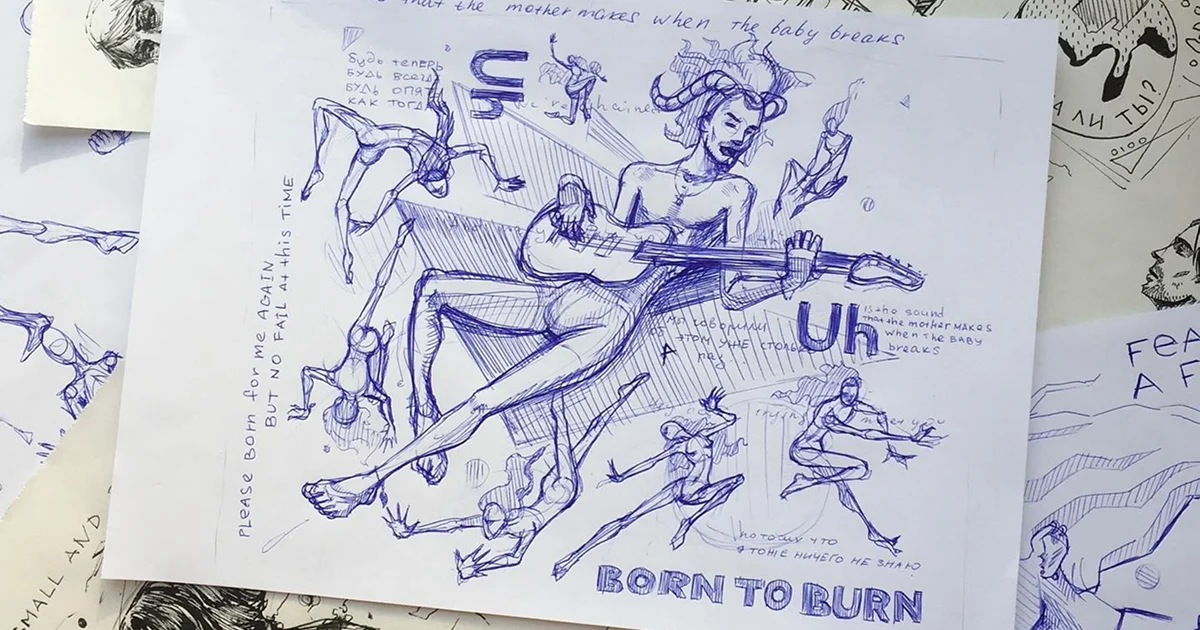
When freed of expectations, activities seem capable of replenishing energy. However, I encountered a paradox: as soon as I scheduled drawing, expectations returned, undermining its restorative effect. I concluded that, to remain recreational, drawing had to be voluntary. To make this possible, I began leaving empty spaces in my schedule. Free from both obligation and guilt, these gaps became fertile ground—I would draw occasionally and feel a sense of relief. The remaining question was how much of my schedule I could still structure.
Neither people nor machines are designed to operate continuously at full capacity. Both deteriorate under such strain. To improve durability, we can borrow a concept from engineering: the factor of safety. In human terms, this is the proportion of time spent on purposeful activity, with the remainder serving as a buffer.
Assume sixteen waking hours per day and a safety factor of, for example, seventy per cent. This leaves roughly eleven hours for purposeful activity and five for unstructured purposeless time—in my case, to doodle without guilt.
Whatever the cause, allocating a third of the day to purposeless activity sounded like nonsense to me at first. Yet, considering that burnout cost me my sense of identity—something I have yet to fully regain—prevention becomes a strategic priority. If that requires deliberately reserving time for seemingly pointless activities, so be it. This approach does not eliminate productivity; it simply makes it more sustainable.