Enough left in the tank
How AI helped me ship Frontier Icons and still have the energy to move on.
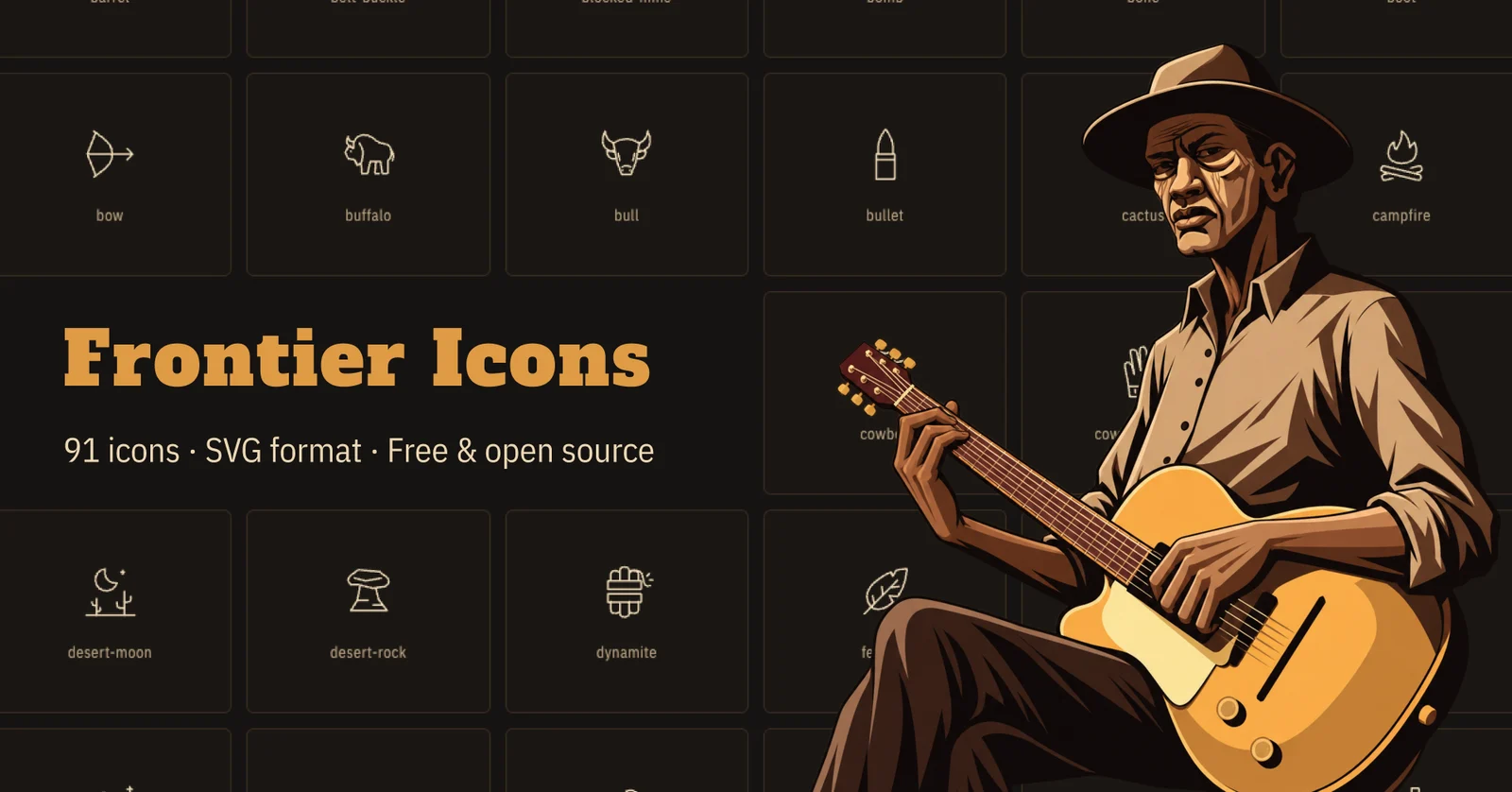
When I finish one project, I tend to move on to the next pretty quickly. So apart from an Instagram announcement, I haven’t really talked about Frontier Icons — how it came together, and why I finally shipped it.
I did write about this icon library in Let evolution happen back in early May. At the time, I thought I’d keep adding new icons over time, but honestly, I dropped it. The world is full of libraries with thousands of icons, and a couple dozen of your own can feel pretty insignificant next to them. So you ship whatever little MVP you can manage and promise yourself, and maybe other people too, that you’ll definitely keep working on it. Then life gets in the way, and the project ends up gathering dust. In your own mind, it becomes evidence of failure: you committed to something and didn’t follow through.
I’ve always liked icon websites like Lucide: all those sliders for adjusting stroke weight and changing colors look fun. Though, to be honest, as a designer I usually just download the library without using any of that. But the things that spark your curiosity often need usefulness duct-taped onto them later.
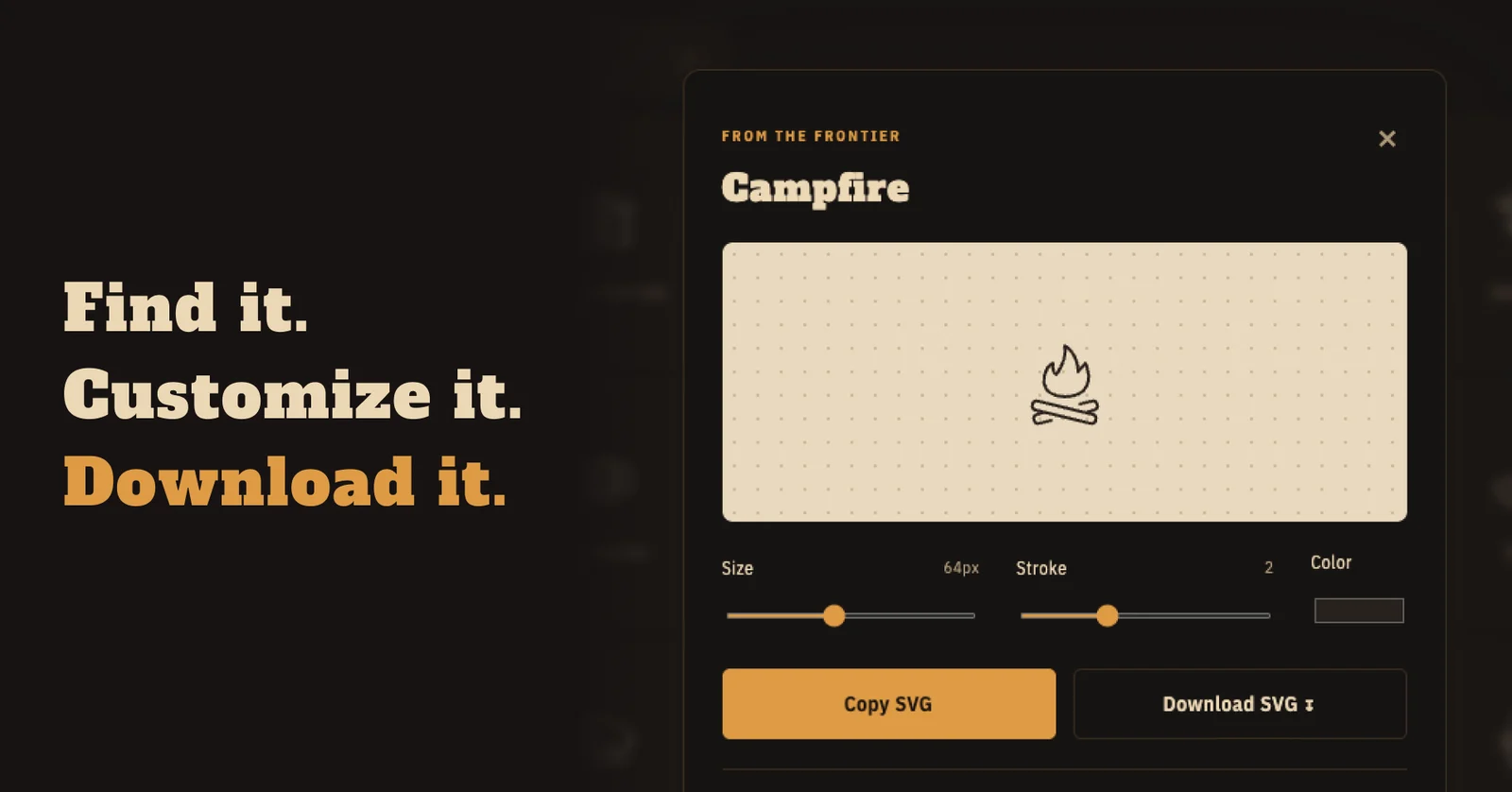
So there I was: a bunch of finished icons, an urge to give them an interactive front end, and Codex to help me do it.
Back in May, I figured building that front end would take, well… a few days at least. This time, I knew I’d have something more or less decent in an hour. And I did. Since I was already at it, I decided to flesh it out a little — see how far I could expand the library beyond those couple dozen icons. Codex isn’t great at drawing icons, but it’s pretty good at rough drafts, and fixing the really bad ones is still a little quicker than drawing them from scratch. In maybe two or three hours, getting distracted by this and that along the way, I added three times as many icons as I’d started with. Wild!
At that point I still wasn’t tired, so I decided to make a tongue-in-cheek landing page for a fictional project called Last Mile, with jokes in the spirit of “A Million Ways to Die in the West,” to show off the icons. And even after that, I still had enough left in the tank to make an Instagram post.
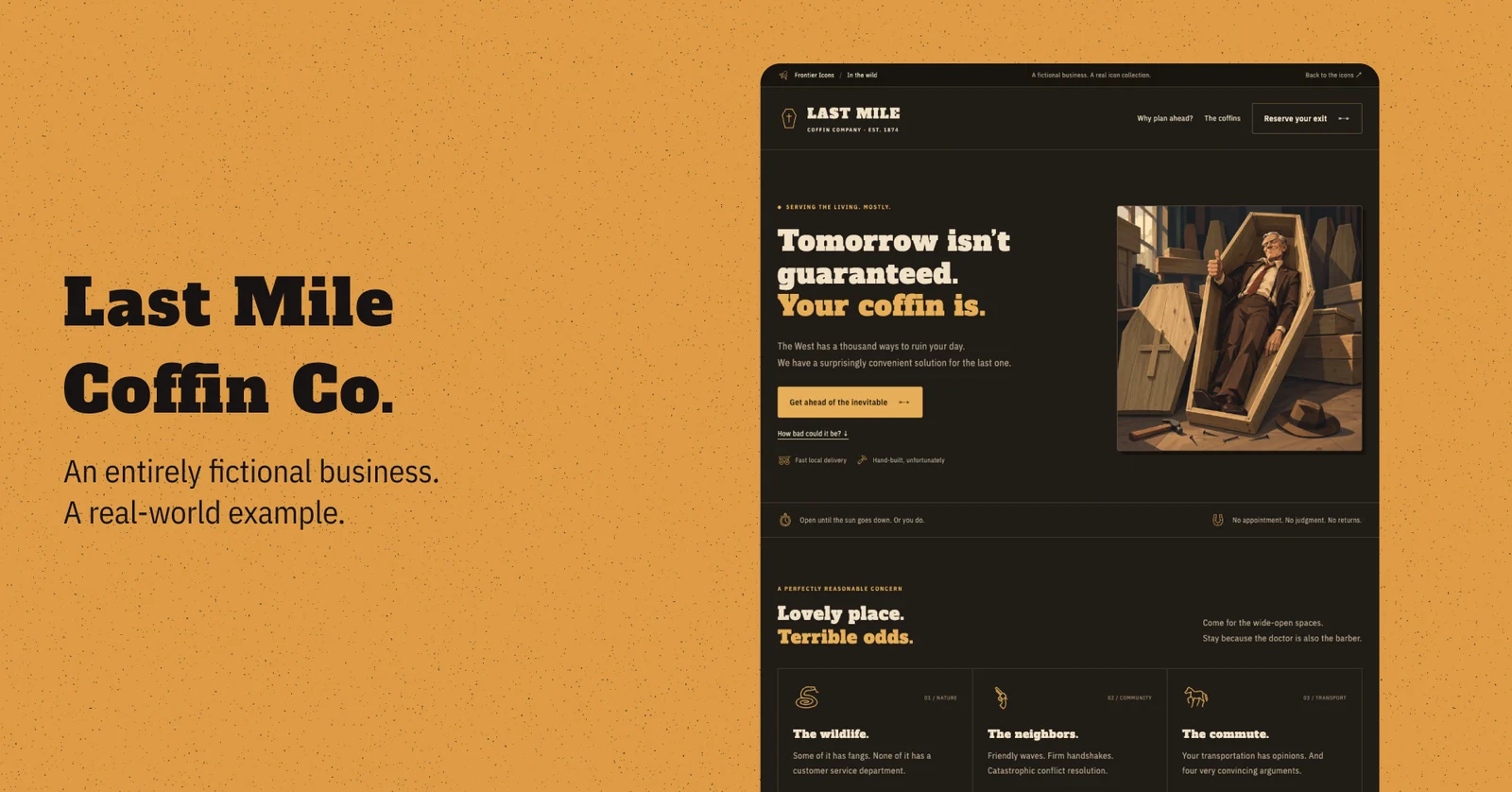
Altogether, it took… Well, the math gets tricky. How do I count the time I spent drawing the icons myself back in May? Do I count the front end separately from the icons? What about the preview and illustrations?
I think it’s less about the hours and more about how much energy you have left. You spend ages working on something and wear yourself out. Then you shout “I made a thing!” into the void and hear nothing back. It’s emotionally hard to move on after that. You feel like, once again, you didn’t quite see it through, and it’s all your own fault, and come to think of it, maybe you shouldn’t have started in the first place.
This time, though, I managed to get the experiment to a point where I could release it and let it go if nothing more came of it — without completely draining myself in the process.
There are a few ways a project like this can succeed. Someone might see that it’s open source and want to contribute. A potential employer might find it in my portfolio, and it might help them decide to hire me. Or the experiment might give me an idea for my next project, help me understand something better, or leave me with something I can use down the line.
And I think that last outcome is mostly what I optimize for. Even when I’m unhappy with myself and the results, on the whole I consider these projects successful: one pushes me toward another, and that one leads to the next. I’d like them to lead to work and collaborations too, but I mostly hope that happens rather than actively work toward it. After all, I often make things that aren’t particularly conventional or trendy, things nobody asked for in the first place. But sometimes they do turn out to be useful to someone. That’s how I got the commissions to make music videos for Model Kit and James Lo Scott — through experiments of my own.
Anyway, I’d love for you to visit Frontier Icons. Meanwhile, I’m off to write about another project, Kompo, which sat in my archives from 2019 until I picked it up again this week.