The silence after launch: a creative project postmortem
Have you ever felt empty after finishing a creative project? I have. It felt like finishing my part and looking up at the orchestra, only to find an empty stage. Did I play that badly? The silence gave no answer.
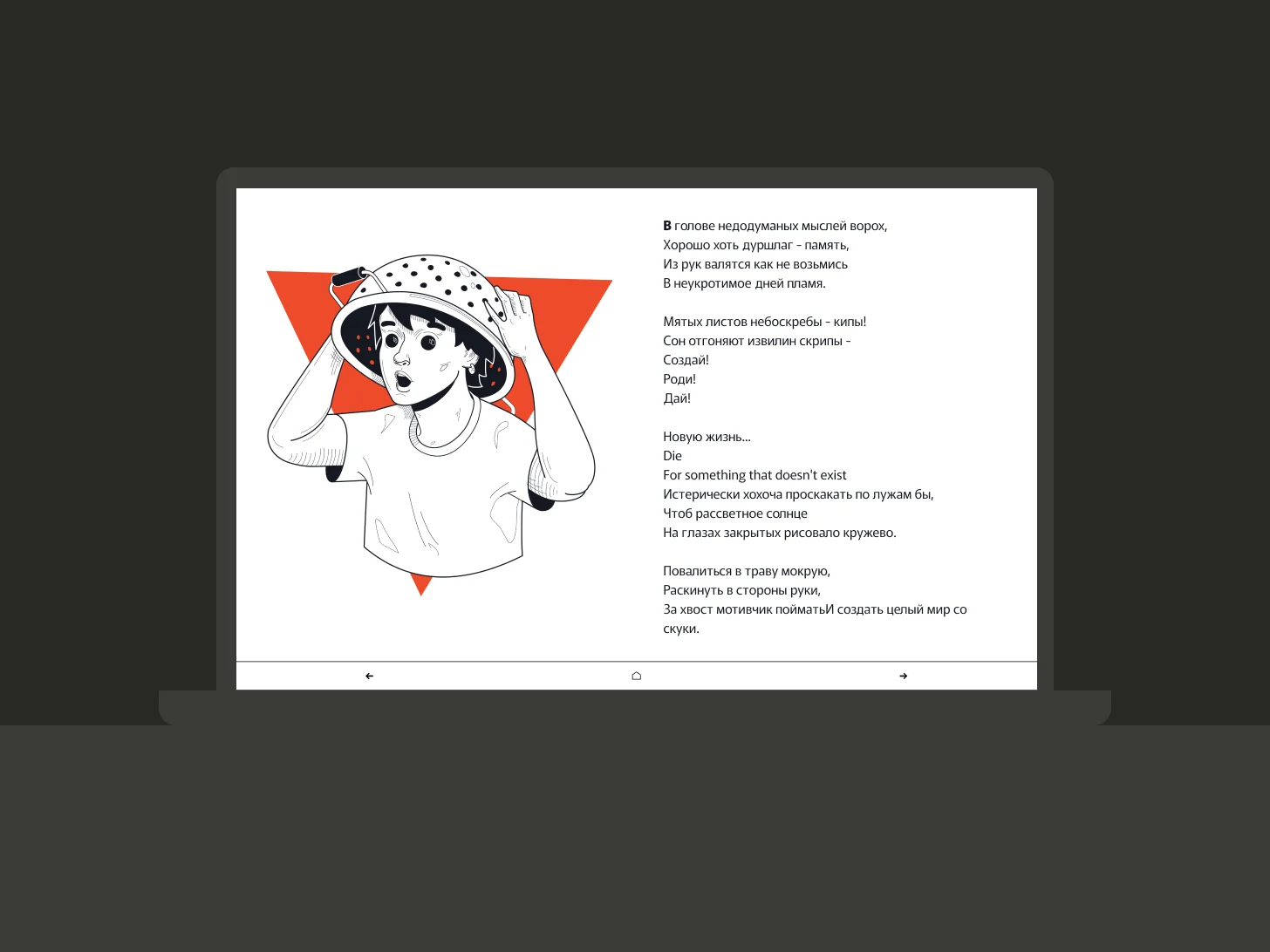
Back in 2022, I built a project called Poempotom. It was a website featuring ten poems that I had written and illustrated myself. I launched it and… nothing happened. People around me said a few kind words, but that was not what I was looking for. I wanted some sign that there was demand for my poems, illustrations, website building skills—anything at all. Nothing grew from the seeds I had sown, and worse, I had no idea whether the problem was in the seeds or the soil.
My creative process used to revolve around two phases: ideation and building. If Poempotom had been something I created purely for the joy of it, there would have been no problem. But I made it to showcase what I was capable of and to discover whether anyone actually wanted it. What my process lacked was a phase dedicated to exposure and demand validation—both crucial for output-centric projects. Without them, the process-centric loop becomes little more than a carousel: enjoyable to ride, but incapable of taking me anywhere.
I built several projects this fruitless way before finally finding a way out. The trick was to treat a creative project like a product. Creative people typically avoid talking about objectives, investments and returns. Product people, by contrast, discuss these things all day long. Surprisingly, many of the ideas and practices they developed are fully compatible with managing creative projects. One of the most fundamental is the product lifecycle itself, which consist of three phases: exploration, validation, and growth.
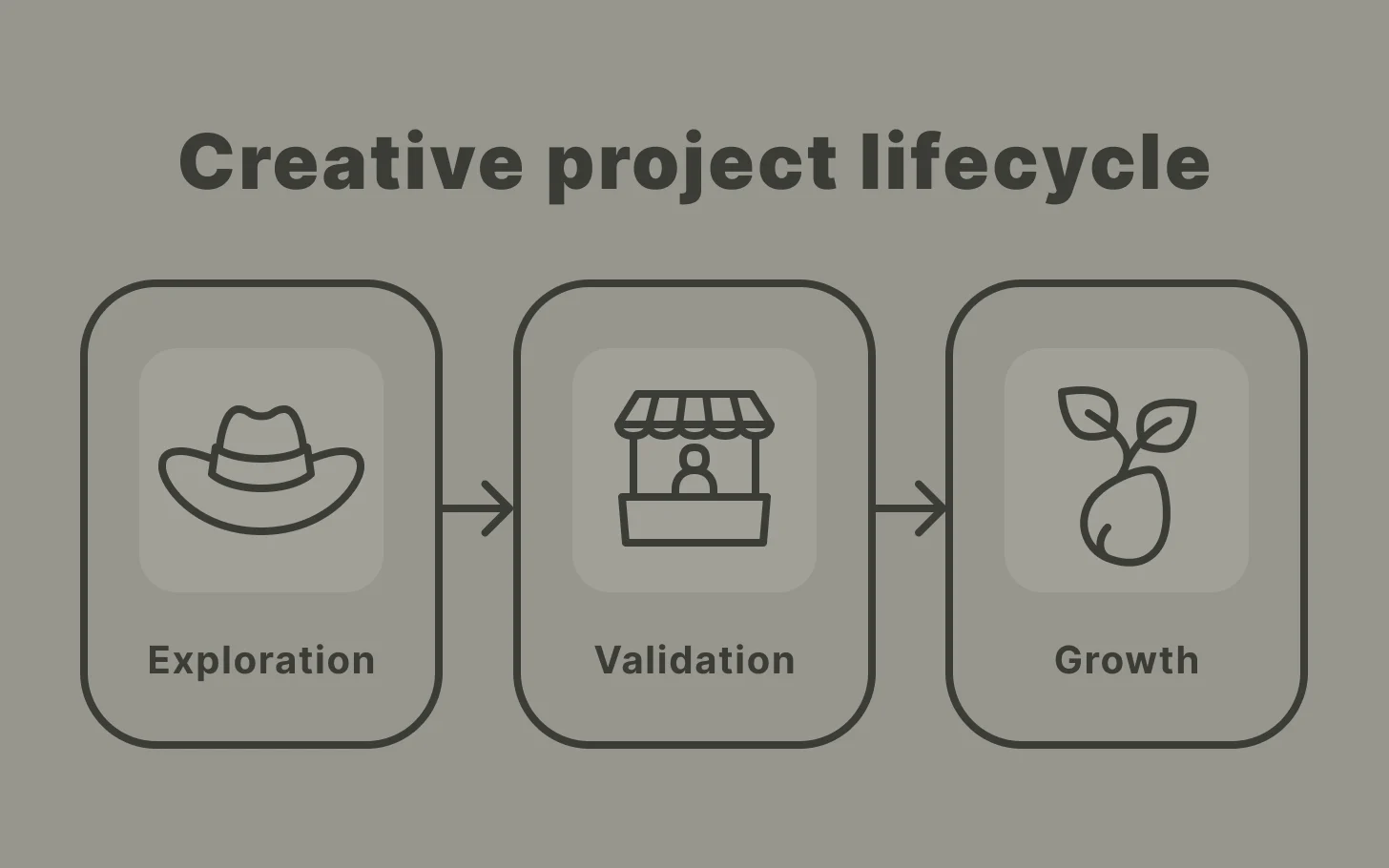
My previous approach resembled an exploration phase: I experimented and then shaped those experiments into projects. My expectations, however, resembled the outcome of the validation phase—the phase I never truly entered. After finishing the exploration phase with a prototype, I stepped into the market, cried out once, got frightened by my own echo, and crawled back into my workshop to continue looping between ideation and building. Bringing something to market is fundamentally different from creating it, so it is natural for creatives to feel as though they have opened the wrong door. Yet without market validation, any talk of growth is pointless.
The positive side of the Poempotom story is that, through experimentation, I discovered something I could actually bring to market. In that sense, my approach to exploration was surprisingly product-like. The result of those efforts was effectively a minimal viable product—overloaded and highly specific to my personal taste, yet still something real and deliverable.
The next step should have been entering the market. The market, however, is an abstract entity, so I needed to experiment with both the audience and the way I communicated the product in order to detect demand. The hardest part for me, as a creative person, would be resisting the urge to change the product itself. By reshaping it to the need of a single user, I could easily make it less suitable for everyone else. Better to leave it as it was. The purpose of the validation phase is to discover whether users for the prototype actually exist. Only later can feedback from real users provide reliable insights into how the product itself should evolve. That, however, belongs to the growth phase—and reaching it inevitably depends on successful validation.
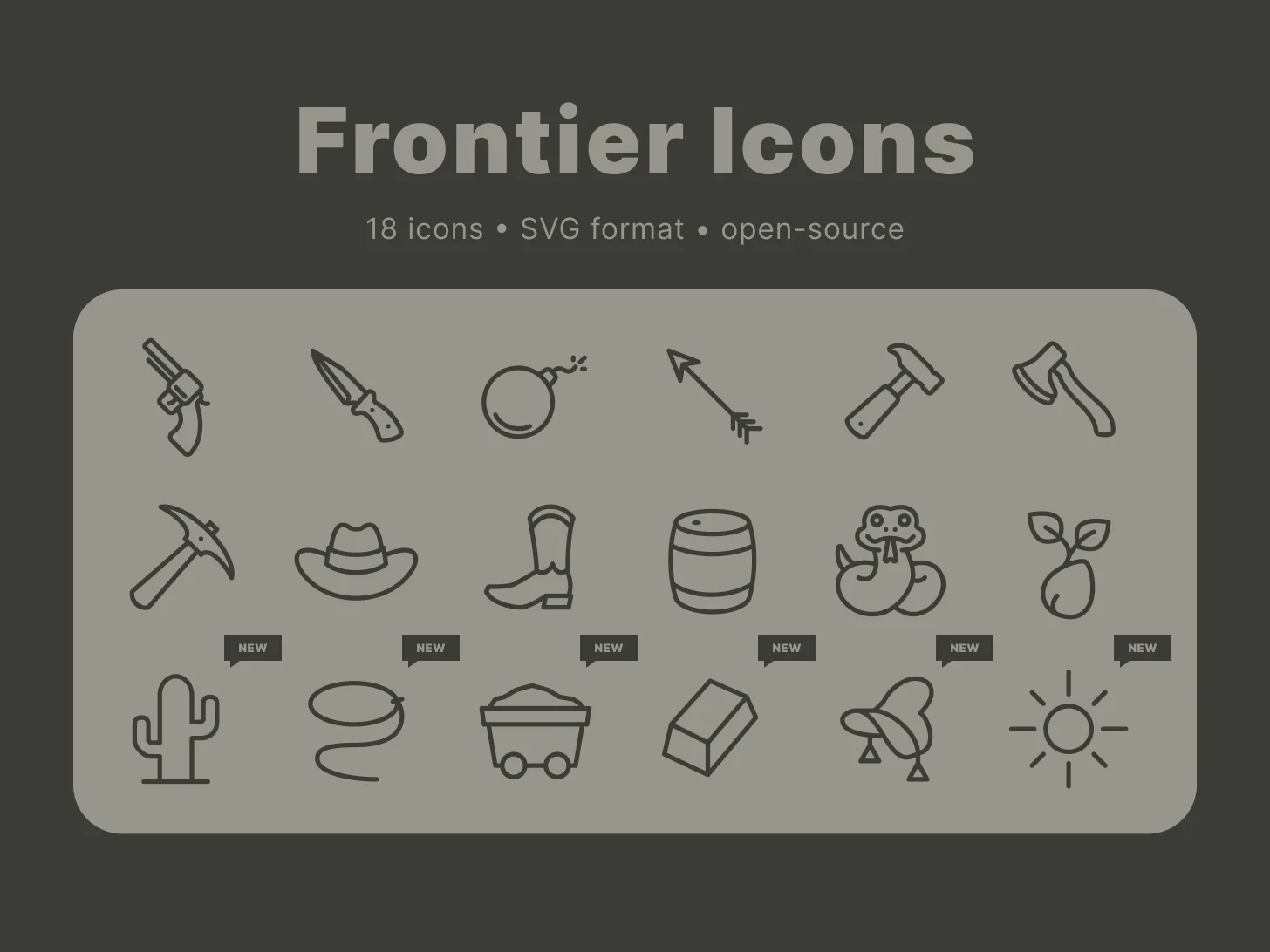
Since Poempotom never reached the growth phase, I will leave that topic for future essays. Today, I am working on a project called Frontier Icons, which I mentioned in my previous essay. The MVP is already here—you can download the pack for free on my GitHub. Six new Wild West-themed icons were added to the collection this week, and this is only the beginning. Unlike Poempotom, this project is now truly in its validation phase, searching for its first users.
There are still many things to learn about building creative products, yet this time I at least understand the stage I am in.