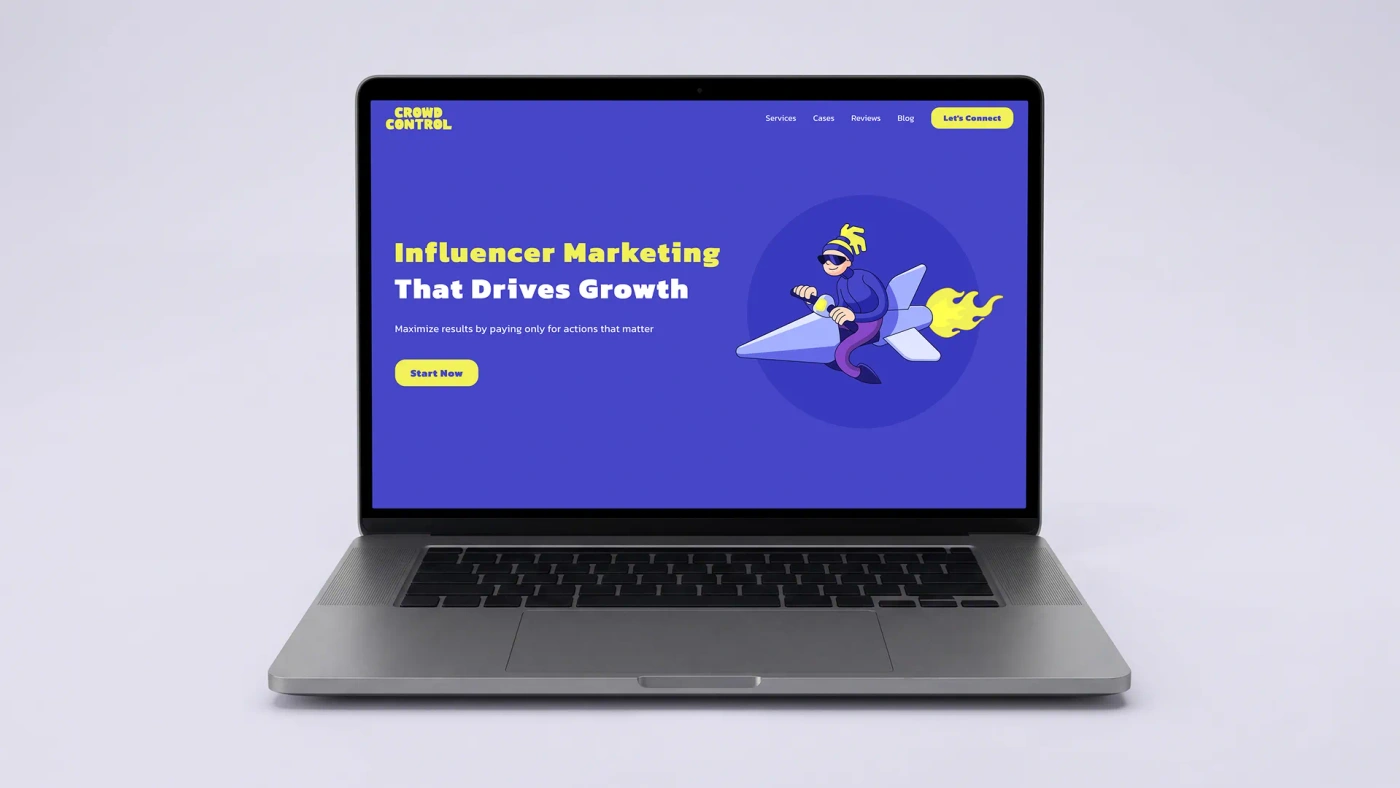
Crowd Control / Brand design · Web design & build
Identity & website launch
In spring–summer 2023, I designed and built a Tilda website for an influencer-matching service initially targeting gaming businesses. The logo, mascot, and visual system supported that launch; the client team provided the name and copy.
Brand & Web Designer
2023
- Identity & mascot
- Website design
- Tilda implementation
The challenge
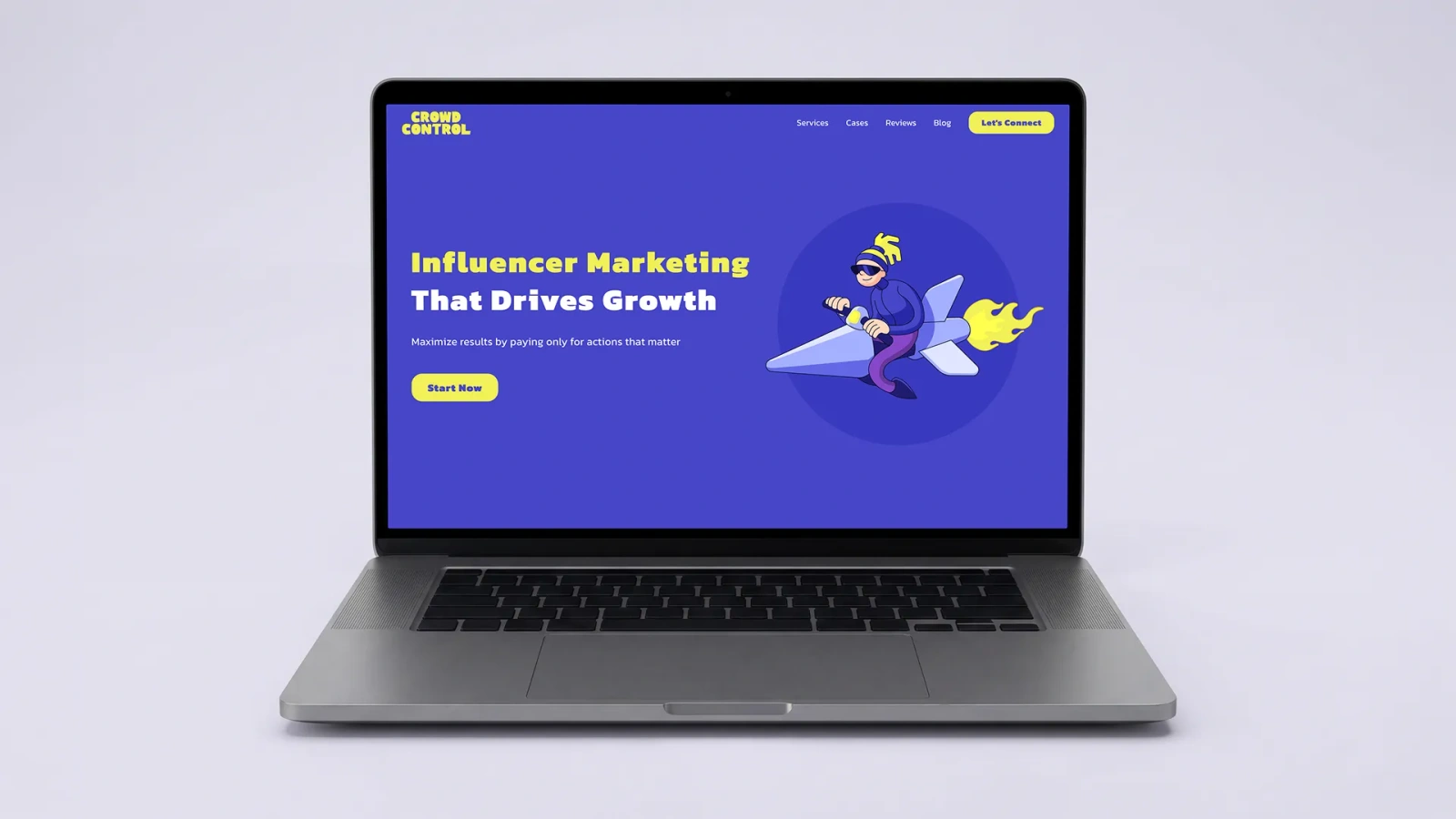
The service needed a working website for advertising campaigns. The client wanted an energetic illustrated direction, while the implementation needed to remain practical to update.
My contribution
I designed the logo, character, interface, and website, and implemented it in Tilda. The client supplied naming and written content. I later returned for two rounds of website updates.
Build the identity around the launch
The project came through a former marketing director I had worked with at Zvuk. The client wanted an illustrated direction related to that work. Gaming was the initial business focus, which gave the character and visual tone a useful starting point.
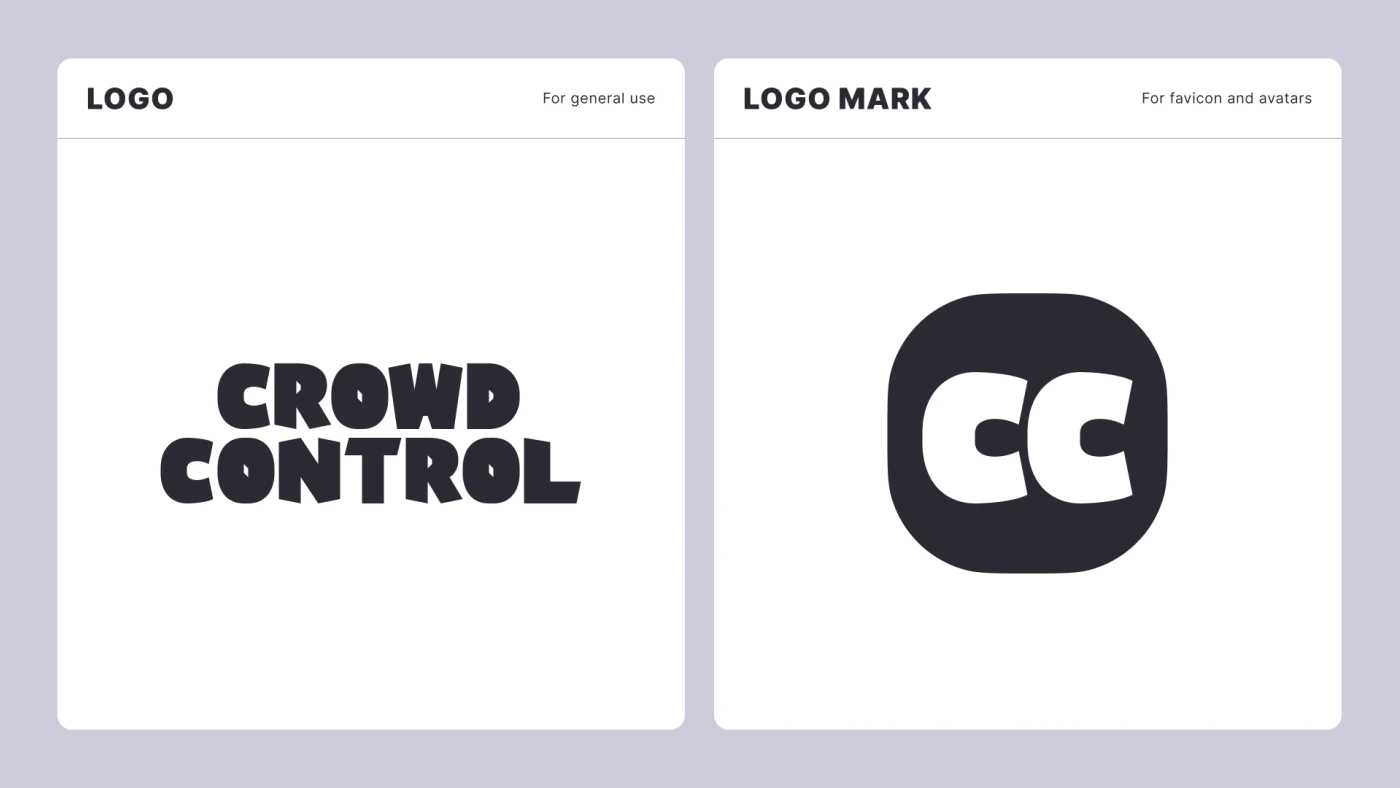
I designed the wordmark and compact mark, then developed the typography, colour palette, and interface around the illustration. The identity supported a concrete deliverable: a website ready for campaign traffic.
Give the gaming direction a character
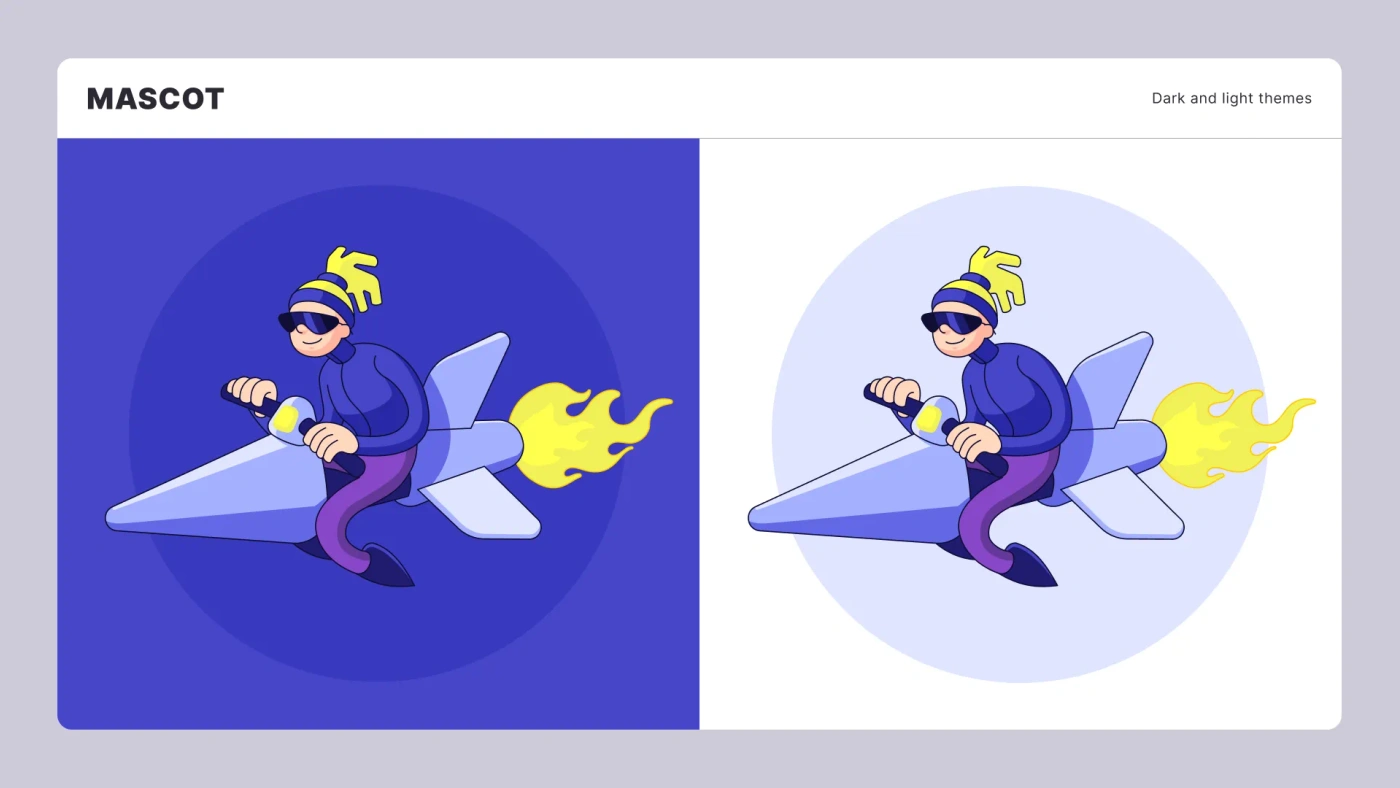
Booster rides a vehicle somewhere between a space scooter and a rocket. The gaming context and the brand’s emphasis on success shaped the energetic character, with bold lettering and vivid colour following that direction.
The initial site included several illustrations, with a larger series envisaged. Later requirements reduced their role. When the site was adapted toward beauty businesses, we moved away from this illustrated language for that audience.
Design for the way the site would be maintained
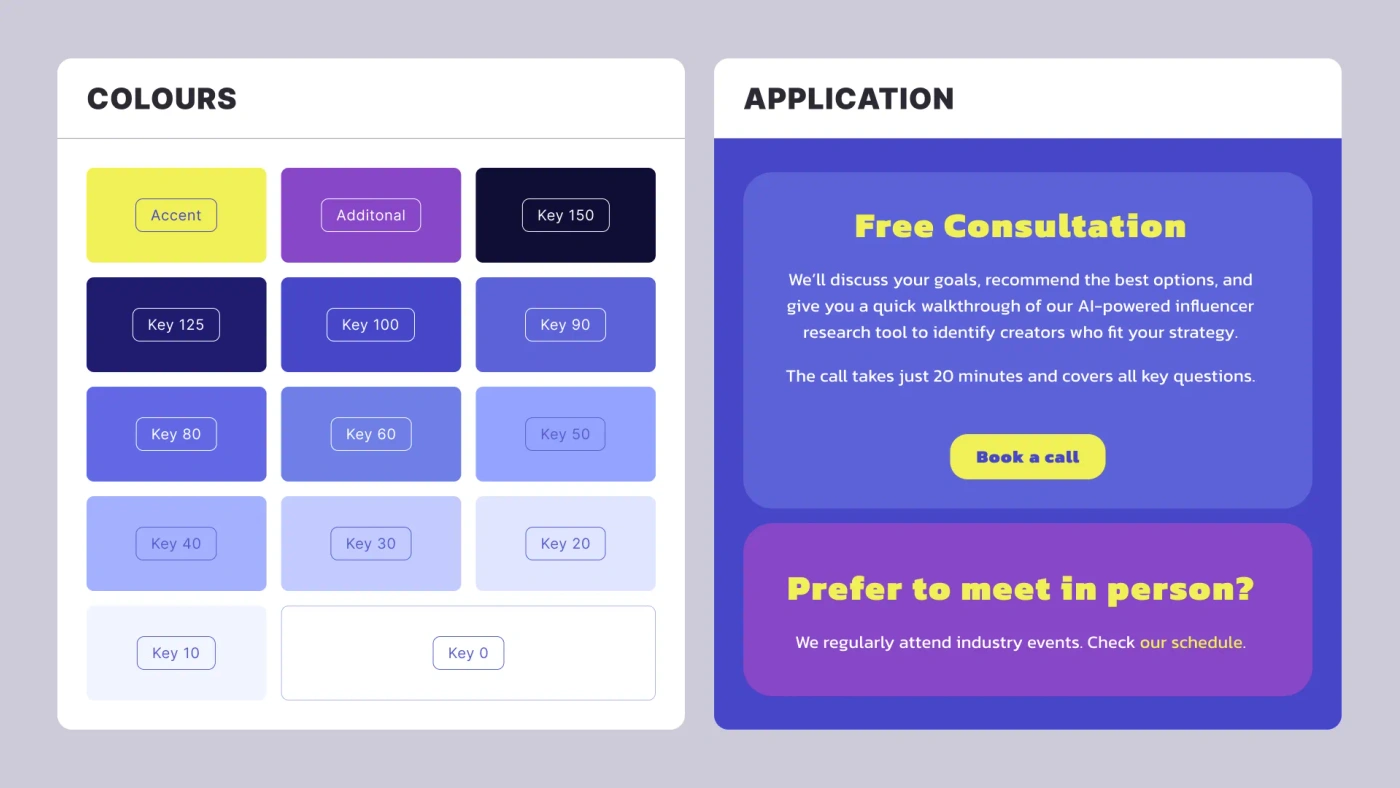
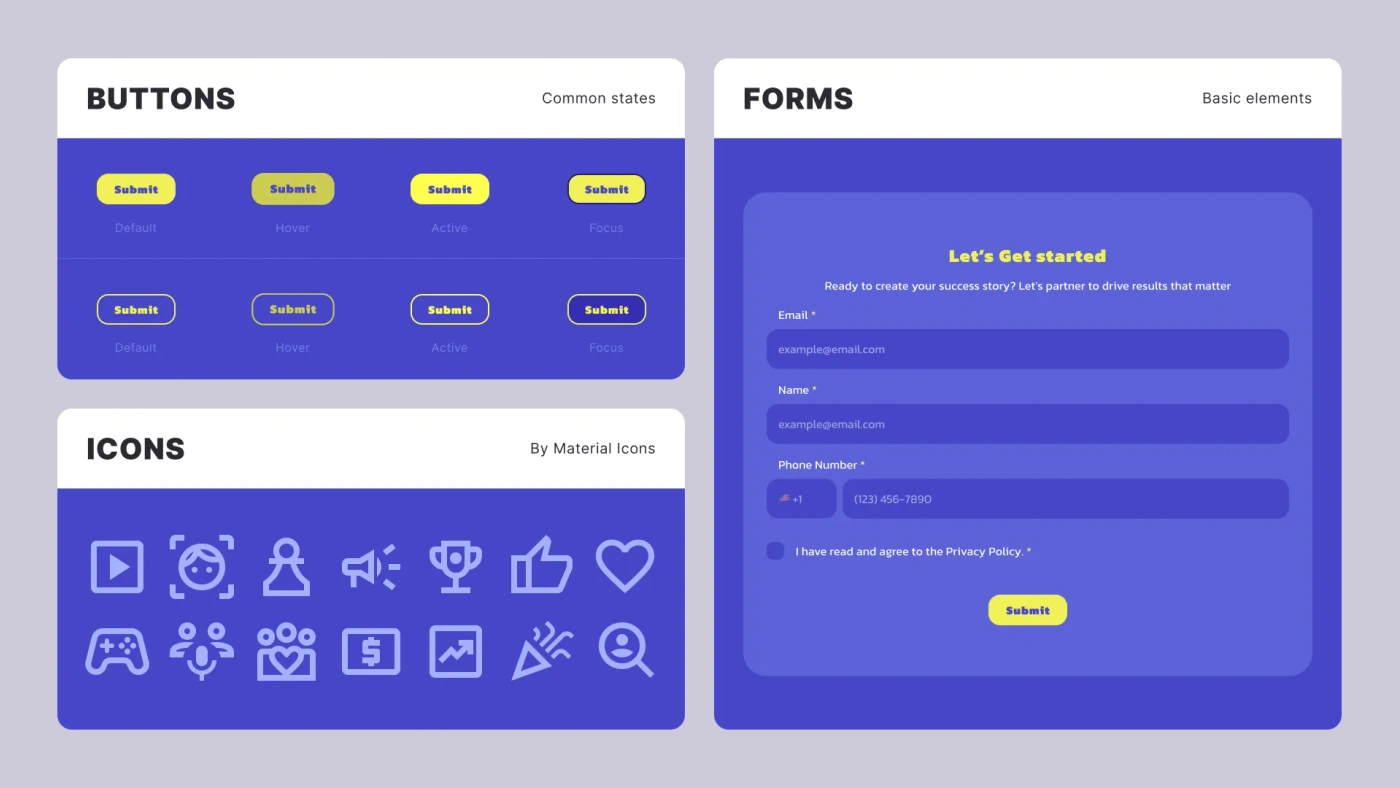
I used a triadic palette, clear text contrast, and a type-led spacing system. The main practical constraint was the Tilda implementation: I worked largely with standard blocks and design overrides to keep ongoing updates manageable.
That choice influenced the interface. Familiar section structures and reusable components gave the site a consistent foundation while keeping it close to the platform’s existing building blocks.
Launch, then adapt to changing requirements
I designed and built the website from the team’s supplied copy. There was no dedicated user-behaviour analysis available, so I worked with familiar landing-page patterns and the client’s requirements.
The site launched, and I returned for two later rounds of updates, roughly a year and two years afterward. It continued under a different name with much of the design retained. The story is a delivered website and subsequent adaptations; conversion performance was not available to me.